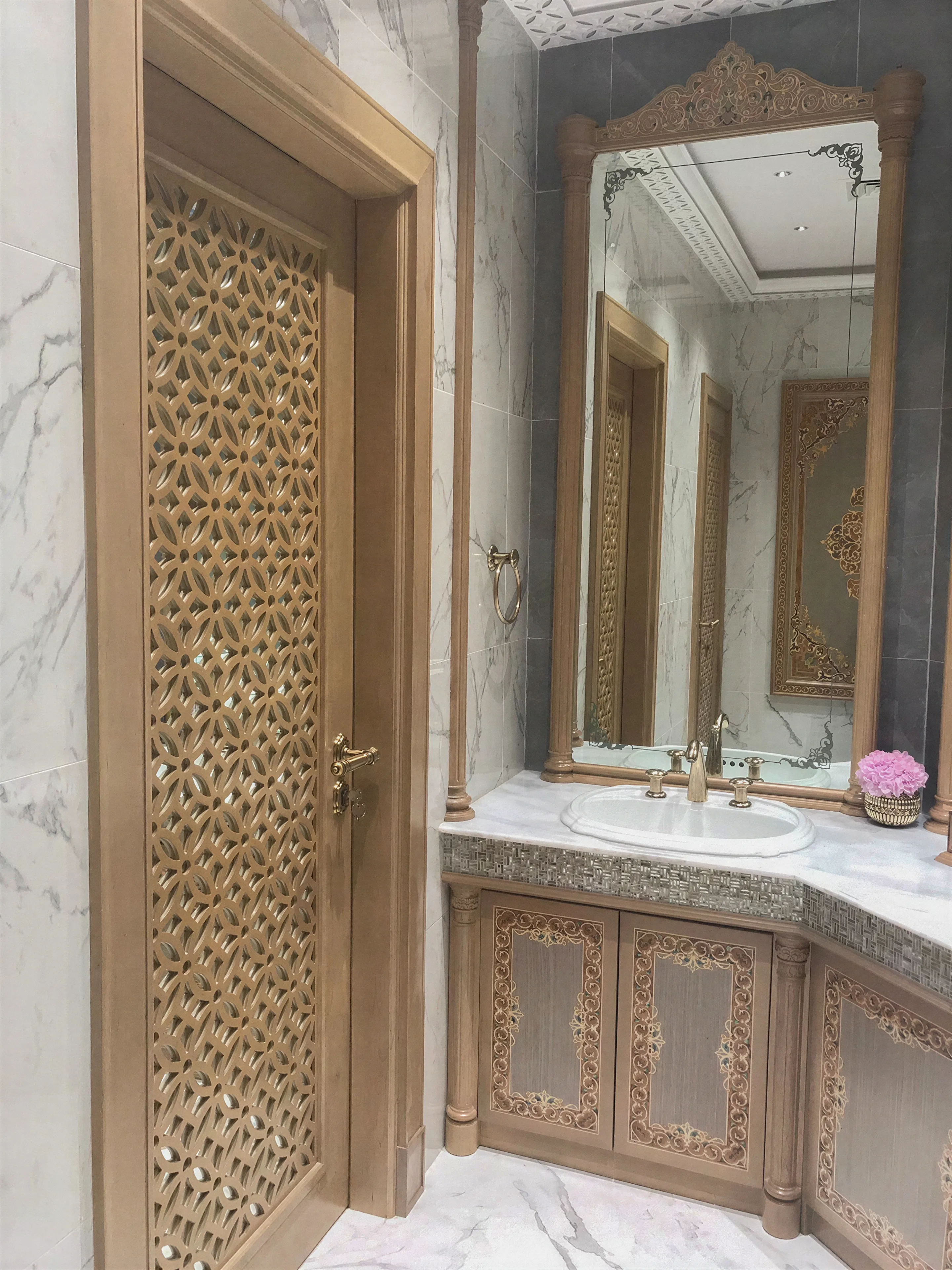



A rooms' floor is its fifth wall; it anchors the interior and balances the room. Floors are a functional design element. Choosing the correct type of floor is essential for design flow and functionality.
The Flooring market is an ever-evolving $ 463.13-billion market, with annual growth of 5.7% per year. It is an increasingly demanding and competitive market; solutions like Waterproof Vinyl Plank, SPC Rigid Core flooring, and LVP flooring have evolved in quality to compete with Hardwood flooring. While carpet material has improved in terms of stain resistance and comfort, it is taking a share of the traditional wool carpet market.
Floors can be used in design to divide the space visually in open floor interior design. Mixing different types of materials can be challenging for designers and contractors alike. Design flow and floor leveling must stay consistent throughout the space. Understanding floor transitions and how to mix hardwood floors with carpet is critical for a complete interior design. In this guide, we will address
Understanding the pros and cons of each floor type can help you make a better decision when choosing a flooring solution. Longevity, acoustics, and comfort, along with maintenance and ease of repair, are important factors to consider.
Hardwood floors are a status symbol for luxury home builds. The natural wood grains and depth of color add sophistication to the interior and drive up the home resale value. The uniqueness of each wood panel can’t be recreated in a factory. Natural wood floors are long-lasting if maintained correctly, lasting up to 100years.
Sealed natural wood floors are easy to clean, making them ideal for high-traffic areas. Wood also bends and expands, making it a softer alternative to marble flooring, for example. Walking on wooden floors dampens the load on joints and absorbs the impact from falls better than tiles. Also, hardwood floors can be sanded to remove scratches, signs of wear, and discoloration. And unlike carpet, hardwood floors improve the air quality in the room by not holding moisture.
The scratch resistance of hardwood floors is limited. Scratches on natural wood floors can compromise the seal, making them vulnerable to moisture. Natural wood floors need to be maintained and resealed every 3 to 7 years. It is recommended to refinish your wooden floors ( sanding and sealing) every 7 to 10 years.
Hardwood floors can expand and contract due to temperature fluctuations, so the installers have to account for that by using flexible caulk at the ends to avoid buckling and breakage.
The upfront cost of hardwood flooring is higher than its engineered counterparts. The installation of hardwood floors is more complex than vinyl floors, making the cost of the installation higher. Having a proper installation is essential to avoid breakage due to temperature fluctuations. The installers can charge anywhere between $4 and $10 per square foot, while the material ranges from $5 to $12+ alone.
The installer should test the moisture content before installation. The wood panels have to acclimate for 5-14 days in the installation environment. The subfloor must be dry and clean to avoid mold buildup. Also, allowing half an inch of room for expansion is standard practice in wood flooring installation.
Hardwood floors are easy to clean and easy to scratch. Making them both a good and bad choice for pet owners. While cleaning up a pet mistake is manageable on wooden floors, the propensity for scratches to build up can increase the maintenance cost for the floor.
Hardwood floors are ideal for classic and contemporary luxury interiors. Hardwood floors are a strong statement in a luxury build. The longevity and the ease of cleaning make them stand out. If you don’t mind the upfront cost and maintenance, then the answer is yes.
Vinyl flooring has evolved over the years; the moisture and scratch resistance make it a preferred choice for many homeowners. Both the visual quality and built materials have improved, with wood grain imprinting and a multi-layer plank construction.
Waterproof vinyl plank flooring outperforms hardwood floors in highly humid areas like the basement and restrooms. LVP, or Luxury vinyl flooring, is a high-end variation, with more wood-like feel and texture. The addition of a 20mm urethane wear layer enhanced with aluminum oxide made LPV and vinyl flooring planks even more wear-resistant, making them ideal for families with pets. Vinyl flooring bridges the gap between the classical wood finish for home interior floors and the practicality of synthetic materials.
Vinyl flooring excels in cost and simplicity of installation. Its ability to resist scratching and repel moisture makes it a preferred choice for home DIYers and budget-restricted builds.
While vinyl flooring is a practical and cost-effective option. The longevity and appearance are not its strongest criteria. Floors need to be replaced anywhere between 3 and 20 years, with SPC rigid core lasting up to 20 years, while the lower end of vinyl flooring might not hold up for more than 3 years.
Also, vinyl flooring is less forgiving for subfloor deformities, as it will show any imperfection in the subfloor. Also, they tend to lower the home resale value; home buyers still value hardwood floors for longevity and maintainability.
The simplicity of installation and the lower upfront cost for vinyl flooring are their most attractive criteria. Compared to hardwood floors, vinyl floors in general are much easier to install and less likely to expand and shrink. The cost of installation per square foot ranges between $1.5 to $5, cutting the cost of installation by half when compared to hardwood flooring. The material cost is significantly lower as well, starting from $1 to $6 per square foot.
Vinyl floors offer higher scratch and moisture resistance compared to hardwood floors. Also, they are more cost-effective and easier to install. If luxury finish and long-lasting floors are not your main concerns, then the answer is yes.
Engineered wood flooring is a modern solution for luxury home interiors. It offers the same luxury look of hardwood flooring, without seasonal expansion. Engineered wood floor panels consist of a hard core and a real wood top layer ( veneer ). The solid core minimizes size fluctuation. The cross-ply timber core holds the panel shape, while the top layer recreates the natural wood look.
Engineered wood can recreate the look of wide plank flooring, herringbone, or straight white oak hardwood flooring with less complexity during installation. It reduces the chances of buckling due to expansion. It also offers a higher level of moisture resistance compared to hardwood.
Designers regularly recommend engineered wood over vinyl flooring in mid- to high-end interiors. It offers a comparable look and feel to hardwood flooring with fewer complications. It is more cost-effective and easier to install. It is compatible with all kinds of subfloors, from concrete to plywood.
Even though engineered wood offers better moisture resistance than hardwood flooring, it is still not waterproof. Stone and vinyl flooring are better for areas where water might seep into the floor.
Just like solid wood flooring, installers should check the moisture content before installation. Ensuring both the engineered wood planks and the subfloor are dry is essential. For moister building surfaces like concrete, installers should introduce a layer of insulation between the floor planks and the subfloor.
The cost of installing engineered wood floors is lower than solid wood flooring. It starts at $3, and it can go as high as $8. The material cost varies based on the quality of the wood planks and the thickness of the veneer layer. The material cost ranges from $3 to $10+.
Carpeting has evolved over the years to offer homeowners a wider range of selection for their home interiors. Both the weaving method and the materials have improved to eliminate traditional carpet flaws. Carpet also provides better sound and heat insulation, making it ideal for movie rooms and bedrooms.
Wool carpets are known for their natural softness. They are crush-resistant and regulate room humidity. However, if not treated, they can be easily stained. They are ideal for primary bedrooms and formal living rooms.
Synthetic ( Nylon ) carpets are durable and can bounce back from heavy furniture compression and heavy traffic. They are stain-resistant and easier to clean. Ideal for stairs, hallways, and high-traffic areas.
Triexta ( PPT ) carpets are made out of synthetic material ( Polyester ). They are stain-resistant at the molecular level, durable, and exceptionally soft. It is a middle ground between the softness of wool and the durability of Nylon. Ideal for homes with pets and children's rooms.
Olefin ( Polypropylene ) carpets are synthetic, moisture-resistant solutions for humid spaces. However, it can compact under constant traffic and heavy furniture. It can be used indoors for basements and outdoors, as it is resistant to fading.
Designers can use floor finishes to divide an open floor plan without walls. Whether you have a large living room that opens to a kitchen, or a regular layout with walls dividing living space, it matters. Understanding floor transitions and how to plan them is essential for design continuity.
Carpets are used in interior design for space zoning. Designers commonly use carpet under clustered seating arrangements, such as a formal setting room. They offer visual separation and introduce warmth and comfort.
Choosing the right carpet size is as important as choosing the design of the carpet. There are 2 different approaches to carpet sizes in living spaces.
The front-legs rule, in which the carpet must fall under the front 2 legs of your sofas/chairs. A more classical approach for carpet placement, and a better approach for smaller rooms.
The full-enclosure rule, in which the entire furniture set fits within the carpet parameters, with additional padding of 12 to 18 inches from each side. This approach is ideal for larger rooms and open floor plans, as it offers distinct visual separation.
Dining room carpet should extend at least 24 to 30 inches over the dining table’s edges. The extension allows the chairs to be set and pulled out without exceeding the carpet boundaries.
Mixing flooring solutions, if done correctly, improves the visual separation and enhances the interior design flow. However, sudden floor changes can break the design completely.
Designers approach floor material changes in 2 ways. If the rooms are divided by a wall, the introduction of a decorative floor strip can be sufficient for a smooth transition. The floors should change right under the doorway, maintaining floor consistency at both ends of the room. This can be commonly seen in living room to powder room floor transitions.
In open floor plans, designers can introduce a gradual ( fade ) flooring transition. If a marble floor is to transition into hexagonal floor tiles, the designer might start with a scattered hexagonal tile that gets denser as you get closer to hexagonal flooring. This approach requires clear design, CAD drawings, and skilled installers to ensure seamless execution.
Choosing the best floor for your home can impact your living comfort, home value, and aesthetics. Stone and vinyl flooring are ideal for high-moisture areas, while hardwood and engineered floors are best for common spaces. Bedrooms and movie rooms are best carpeted for sound and heat insulation. Choosing the right material for your carpet can improve air quality and avoid trapping moisture.
Mixing floor finishes needs to be done with the interior design in mind. It offers visual separation and improves safety and practicality.

washington dc . northern virginia . maryland
SANTI Design House is a design firm located in the DMV area. We provide complete interior design and renovation solutions for homeowners and businesses.
© 2026 SANTI DESIGN HOUSE LLC
All rights reserved
All content on this site is created by ©SANTI DESIGN HOUSE LLC, using industry-standard design & visualization tools, meeting the highest standards for interior design and visual technology.